New to Odoo?
Start With Structure.
Odoo is powerful and flexible. But a successful implementation depends on clear scope, structured planning, and governance from day one.
Before selecting modules or customising workflows, understand how Odoo actually works — and what it will require from your organization.
Schedule an Odoo Planning Session
What Is Odoo
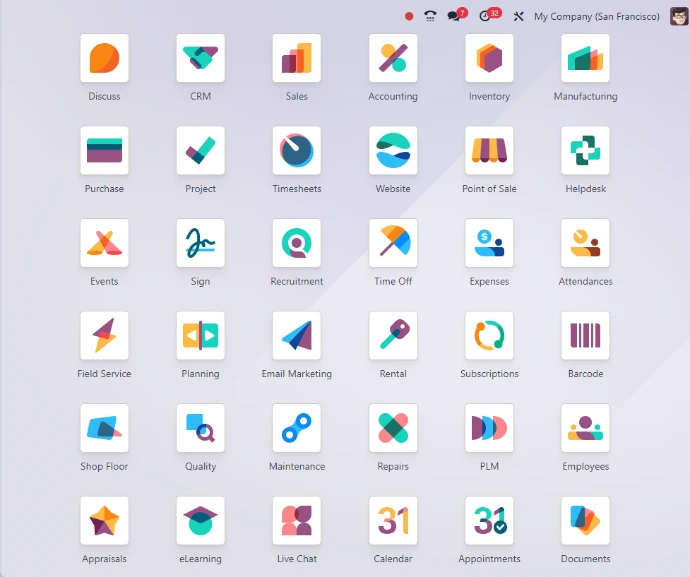
Odoo is a modular business management system that connects your company’s processes into one integrated platform. For example, in a webshop, Odoo can manage your online store, product catalog, inventory, payments, shipping, accounting, and customer records in a single system.
When a customer places an order, stock levels update automatically, an invoice is generated, payment is recorded, and delivery can be triggered without manual data transfer between systems. Sales, finance, operations, and customer support all work from the same real-time data. This integration reduces duplication, improves visibility, and creates a structured foundation for growth.
Understanding Odoo Pricing
Odoo pricing is simple at the license level — but total cost depends on how the system is implemented and structured.
There are three main cost layers to consider:
Odoo Enterprise pricing is based on:
License cost is predictable and published publicly by Odoo.
Implementation Costs
- In a webshop example:
Structured planning significantly reduces long-term cost.
Ongoing & Operational Costs
ERP systems are operational infrastructure — not one-time purchases.
Try Odoo Before You Decide
Free Trial (15 days for Odoo Online)
- Explore core applications
- Create products and test orders
- Review accounting flows, dashboards
- Understand user permissions
This is ideal for understanding usability and basic functionality.
Try Runbot (Advanced Testing)
Test different Odoo versions
Explore module behavior
Review development branches
Validate features before upgrades
Runbot is s powerful playground but it is not an implementation plan.
Official Documentation
Functional modules
Accounting rules
API & development
Integration guides
Hosting options
Testing shows what Odoo can do. Planning defines how it should work for your organization.
What a Structured Odoo Implementation Looks Like
A successful Odoo project is not just configuration. It includes:
Scope Definition
Clear definition of what will and will not be included.
Process Mapping (AS-IS / TO-BE)
Understanding current workflows before designing new ones.
Functional Architecture
Designing how modules interact, how data flows, and how permissions are structured.
Controlled Customization
Custom development only when configuration cannot meet requirements.
Documentation from Day One
Every decision recorded to avoid knowledge loss.
Governance & Change Control
Clear responsibility for decisions, updates, and scope adjustments.
Introducing Structure Before Risk Escalates
In this section, you can address common questions efficiently.
When to Seek Independent Guidance
Consider involving an advisor when:
You are selecting modules but unsure how they should interact
Your scope is expanding without formal validation
You are choosing between Community and Enterprise
Multiple stakeholders are influencing system decisions
You want cost clarity before committing
Architecture decisions are being made before documentation exists
Early structure reduces long-term complexity.
Where First-Time Odoo Projects Go Wrong
Common structural risks include:
Selecting modules before mapping business processes
Customizing too early instead of configuring properly
Underestimating data migration complexity
Ignoring documentation
Expanding scope without change control
Allowing technical decisions without business alignment
Most ERP issues are not software failures — they are structure failures.
Begin Your Structured Odoo Journey
Book a structured consultation before you start your Odoo implementation. Lay the groundwork for sustainable success with expert guidance from GreenMethod.